What European Buyers Should Know Before Importing Kenyan Products
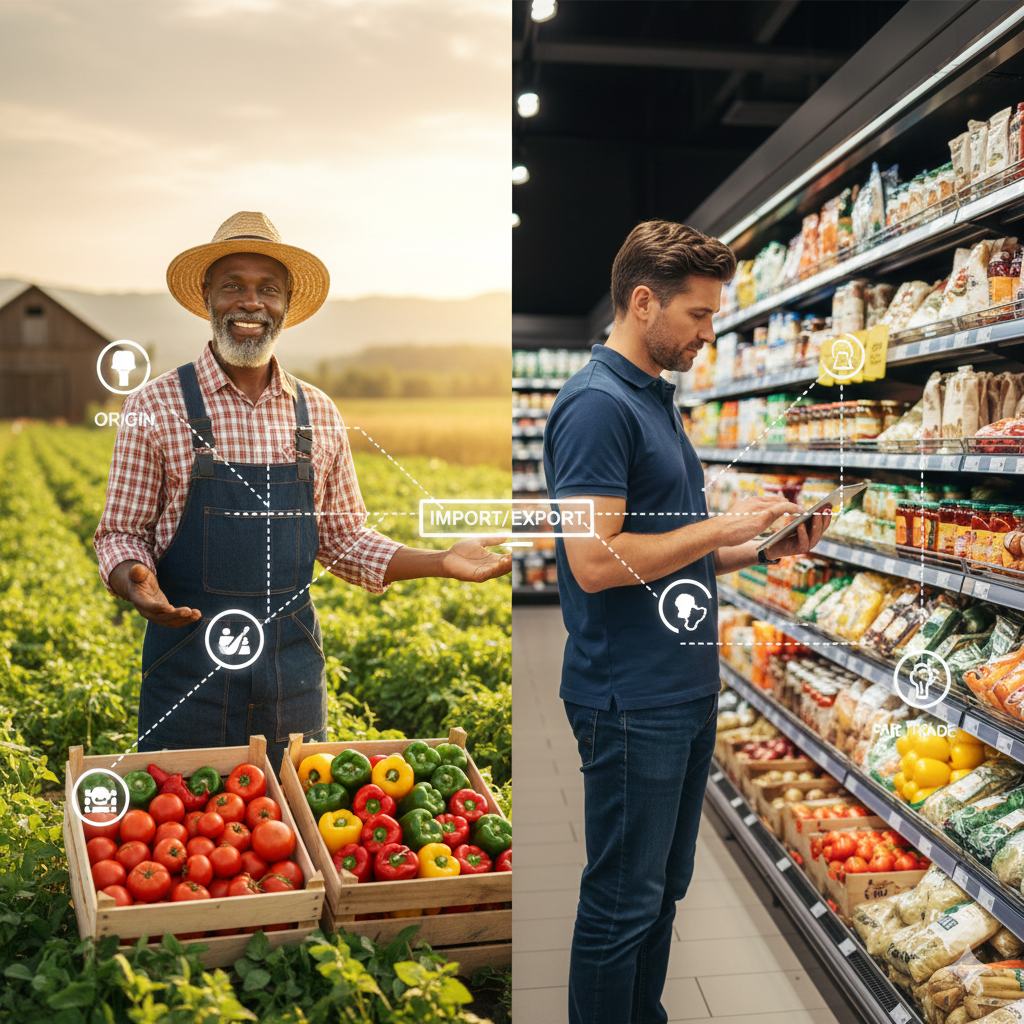
Kenya sits on the buying lists of many European importers for a good reason. The country already supplies a wide range of agricultural and manufactured products into Europe with competitive lead times and strong quality.
At the same time, EU buyers tend to run into the same problems when they start importing from Kenya to Europe. Documents do not match, customs ask extra questions, shelf life on arrival feels shorter than expected, and payments become harder to track than they should be.
After a few shipments, you see both the opportunity and the
operational friction very clearly.
If you manage sourcing, category buying or supply chain for a European retailer, distributor or marketplace, this guide gives you a practical view of importing from Kenya, what to check before you commit to Kenyan supply, and how working with an integrated export partner such as DAC can turn a promising source market into a predictable one.
How reliable is the Kenyan supply base today?
Kenya has a mature export ecosystem in
sectors such as horticulture, tea, coffee and textiles, but reliability still
varies a lot. Some producers know their domestic market well but have limited
experience with EU regulations and documentation, and they may not manage the
cold chain consistently.
As a buyer, you can improve your odds by asking targeted questions:
- How many full EU-bound shipments has the supplier completed in the last 12–24 months, and to which ports?
- Which customers received those consignments, and at what frequency?
- Who signs off the final document pack and books the carrier?
The strong exporters usually have this information ready and can point you to recent EU shipments without needing to search.
When DAC works with EU buyers importing from Kenya, the team screens suppliers for real export capacity, not only price. That includes checking who manages paperwork, how goods move through local hubs and how quality is controlled before loading.
This screening helps
you avoid future disputes and delays with suppliers who are not ready for
European requirements.
What documentation should European buyers expect from
Kenyan exporters?
Nine times out of ten, border friction in
Europe comes back to inconsistent or incomplete documents rather than a new
rule. Before you place repeat orders, agree a standard set of paperwork that
every Kenyan shipment will include.
At a minimum, you should expect:
- A commercial invoice with correct HS codes and clear product descriptions
- A packing list with weights, carton counts and pallet information that match the invoice
- A certificate of origin
- Any required health or phytosanitary certificates for food, plant and animal products
In practice, common problems include HS
codes on the invoice that do not match the customs declaration, weights that
differ between documents and certificates issued to a different legal entity
than the exporter. Each mismatch increases the likelihood of extra inspections
and higher storage fees.
DAC’s application
processing capability aligns documents before goods leave Kenya. For
European buyers, that reduces the number of surprises at the border and helps
you keep planned delivery windows more realistic.
What quality and grading standards matter most for EU
buyers?
For EU buyers, quality is about more than
the product itself. It includes grading, packaging, shelf life on arrival and
consistency from shipment to shipment.
For Kenyan agricultural products, ask suppliers to specify:
- The grading system they use and how it maps to EU expectations
- Expected shelf life at the point of arrival in Europe, not only at the point of packing
- Temperature control from farm or factory to European hub
For manufactured goods or textiles, pay
attention to material specifications, finishing standards, labelling and any
technical requirements that apply to your category.
In practice, reliable exporters can show
you the grading steps they follow, the packing routine they apply on every
consignment and where they record temperature and handling data. If a supplier
cannot walk you through that process in a few minutes, your risk is higher than
it needs to be.
Working with an integrated partner such as
DAC gives buyers another layer of control. DAC acts as a consolidating and
export-facing operator, checking that Kenyan producers supply products that
meet the agreed standard and present them in a way that fits European
expectations.
What route to market works best for European buyers
sourcing from Kenya?
European buyers can access Kenyan products
directly from producers, through Kenyan aggregators or via an integrated export
operator. The best option depends on your volume, category and tolerance for
operational complexity.
Direct purchase can give you sharper pricing but often pushes more work onto your team. Aggregators reduce some of that effort but may still leave you managing multiple relationships.
An integrated partner such as DAC sits between your organisation and the producer landscape in Kenya and can co-ordinate sourcing, documentation and movement as a single operation. Your team gains a single point of contact instead of managing multiple small suppliers and intermediaries.
How should European buyers evaluate logistics when importing from Kenya?
Logistics decisions determine how your
Kenyan products reach the shelf, and how often you need to explain delays to
internal stakeholders or end customers.
Key questions to address include:
- Which products must move by air and which can move by sea?
- How is cold chain maintained from origin to EU entry, and where
are the handover points?
- Who carries responsibility at each step under the chosen
Incoterms?
Many buyers use airfreight for sensitive or
high-value lines and sea freight for long-life items. For both modes, an
accurate landed cost per unit into the EU hub is essential. That cost needs to
cover freight, duties, port and terminal handling, and the storage and local
charges that often get missed in early quotes.
DAC’s logistics services
bring booking, customs co-ordination and regulatory checks into one plan
instead of leaving each shipment to ad hoc arrangements. That means one team is
watching the lane end to end, and you know exactly who to call when something
changes in transit.
Do European buyers need local warehousing for Kenyan
imports?
If you only run occasional large deliveries
to a few customers, you might ship straight from Kenya. Once you want faster
delivery, more flexible order sizes or marketplace fulfilment, local
warehousing becomes far more attractive.
Holding Kenyan products in EU hubs such as
Hamburg or Padborg allows you to deliver across multiple markets in days rather
than weeks, combine products from different producers into single outbound
orders, handle returns locally and offer faster delivery options on online
marketplaces.
DAC’s warehousing services
give European buyers access to storage and inventory management, along with
fulfilment capabilities that already support Kenyan-origin goods. That makes it
easier to add or adjust product lines without rebuilding how you fulfil orders.
How can EU buyers reduce payment risk when importing from
Kenya?
Payment arrangements can create more stress
than the physical supply chain when your teams do not set them up properly.
Multiple small suppliers and mixed currencies can make it hard to see which
shipments have been paid, and which are still open.
A more structured approach means:
- Keeping most trade in EUR or another agreed currency
- Aligning payment milestones with delivery and document checks
- Using statements that reconcile against specific consignments
and documents
It becomes easier to have direct
conversations about performance without arguments over who owes what.
DAC’s client account
management service operates dedicated EUR accounts, detailed statements and
reconciled payouts to Kenyan suppliers. That helps European buyers keep a clean
view of exposure and helps Kenyan partners receive funds on time.
How can EU buyers build long-term, predictable supply from
Kenya?
Long-term success with Kenyan sourcing
comes from consistency. The buyers who get the most from Kenya treat it as a
strategic origin, rather than a one-season experiment. They usually take a
planned approach:
- They choose suppliers with proven export experience and the
right certifications.
- They agree clear product, documentation and logistics
standards.
- They review performance regularly and adjust routes or partners
where needed.
An integrated export partner such as DAC
sits alongside that plan. DAC aggregates volume monitors shipments and keeps
documentation, logistics and payments aligned with the agreements you set at
the start. This structure supports steadier service levels and makes it easier
to scale volumes when demand grows.
If you want to explore Kenyan sourcing with fewer unknowns, it helps to work with a team that understands both European buyer expectations and Kenyan export realities. That combination makes importing from Kenya feel less like a gamble and more like another lane in your regular buying plan.
If you want to discuss a specific lane or category, contact the DAC team to explore what
this could look like in practice.

Lilian Mumbua
Posted on November 24, 2025
Related Articles

A Step-by-Step Guide to Selling Your Kenyan Products in Europe
If you run a business in Kenya, you already know there is steady demand for Kenyan tea, coffee, flo...
Read more →
Why Packaging and Labeling Matter for EU Export Markets
Exporting to the European Union represents a significant opportunity for Kenyan producers seeking...
Read more →
The Role of Trade Partners: Why Kenyan Exporters Should Partner with DAC
Exporting farm produce from Kenya to international markets, especially the European Union (EU), pres...
Read more →